
Infrared heat changes how your body experiences a Pilates class, but its benefits don’t need to be overstated. A heated class may help you feel warmer, more mobile, and more comfortable moving through your range of motion. It can also make the workout feel more physically demanding.
But does infrared heat make a class “better”? To answer that, it helps to first understand how infrared heat differs from traditional room heating, along with what that difference can mean for the way you move, sweat, and train. At FIT AS FIRE, infrared heat is part of Infrared Mat Signature Sculpt, where it adds to the experience while our SRT method drives the training.

These three environments change the workout experience in genuinely different ways, and it’s worth understanding the mechanism before deciding which one you prefer.
None of these three approaches is inherently superior. They simply produce a different warming process, a different room experience, and a different demand on your body’s cooling system.
Infrared heat uses radiant panels that warm your body directly, similar to how sunlight warms your skin even on a cool day. The air in the room may stay relatively comfortable while your body still absorbs meaningful heat.
Traditionally heated rooms work the opposite way. They heat the air first, and your body warms up through convection, contact with that warmer surrounding air. This is closer to how a sauna or a hot yoga studio typically operates.
A non-heated environment relies entirely on your own exercise effort to raise your body temperature, with no added heat source doing part of that work for you.
One of the most practical benefits of added heat, infrared or traditional, is simple. Your body may feel warmer and more comfortable sooner.
Heat can reduce the feeling of stiffness in muscles and joints, which may make the first part of class feel easier to move through. This can be especially appealing if you tend to feel tight exercising early in the day or after sitting for long periods.
Either heated environment can support the warm-up process, but it shouldn’t replace an active warm-up. Your body still needs controlled movement to prepare the muscles and nervous system for more challenging work, regardless of the room temperature.
A warm room can make your body feel more flexible during class. That feeling is real, but it helps to know where it comes from and how long it lasts.
As your body warms up, your muscles and connective tissues tend to become less stiff.
Blood flow increases, and your nervous system may become more comfortable allowing greater movement. That can make your body feel “looser.” Movements involving the hips, hamstrings, and spine may also feel smoother during a heated class.
Heat can make you feel more flexible in the moment. Lasting flexibility still depends on regular mobility work, strength, and progressive movement over time.
There’s also a reason not to chase the deepest stretch possible in a heated room. Because heat can make your body feel looser, it may be easier to move beyond a range you can actively control. Good form still matters more than how far you can stretch.
A heated Pilates class can feel harder than the same class in a non-heated room. That’s because your body is doing two jobs at once. It’s exercising while also trying to cool itself down.
As your body heats up, more blood moves toward your skin to release that heat. Your heart rate can rise as a result. That extra demand can make a low-impact class feel more cardiovascularly challenging, even when the exercises themselves haven’t changed.
This doesn’t mean heat turns the workout into something dramatically different. A higher heart rate in a hot room is partly a response to temperature regulation, not necessarily a sign that your muscles are doing significantly more work than they would in a non-heated room.
Warmth often feels soothing on stiff or sore muscles. Many people also enjoy the relaxed feeling that follows a warm, sweaty workout. That’s a fair reason to prefer a heated environment, even if the experience is partly personal.
The research here deserves real caution, though. Evidence specifically on heat therapy for reducing post-exercise soreness is mixed, and some studies applying heat shortly after intense exercise have found it insufficient to meaningfully prevent soreness on its own.
Much of the broader research on heat and recovery comes from sauna use or general heat therapy rather than a heated workout class specifically, so treat any recovery benefit as a possible bonus, not a guaranteed outcome.
Two common claims about heated workouts don’t hold up to the research.
A heated class can make you sweat heavily, but sweating is primarily your body’s cooling system. Your liver and kidneys are what remove waste from your body. Sweating more mainly means losing more water and electrolytes, not evidence that your body is undergoing a special detox process.
Heat also doesn’t cause massive calorie burn on its own. A heated class may feel tougher and your heart rate may run higher, but the heat itself appears to add only a modest amount of energy expenditure beyond the exercise.
Any immediate drop on the scale after a very sweaty class is mostly fluid loss, not body-fat loss. Once you rehydrate, that water weight returns. Long-term fat loss still depends on overall activity, nutrition, and a sustainable calorie balance, not the temperature of the room you trained in.
You don’t need infrared heat to get results at FIT. The strength, control, and movement-quality benefits come from the training, not the thermostat. What the heat changes is how the class feels, so choose the environment that helps you move well and stay focused.
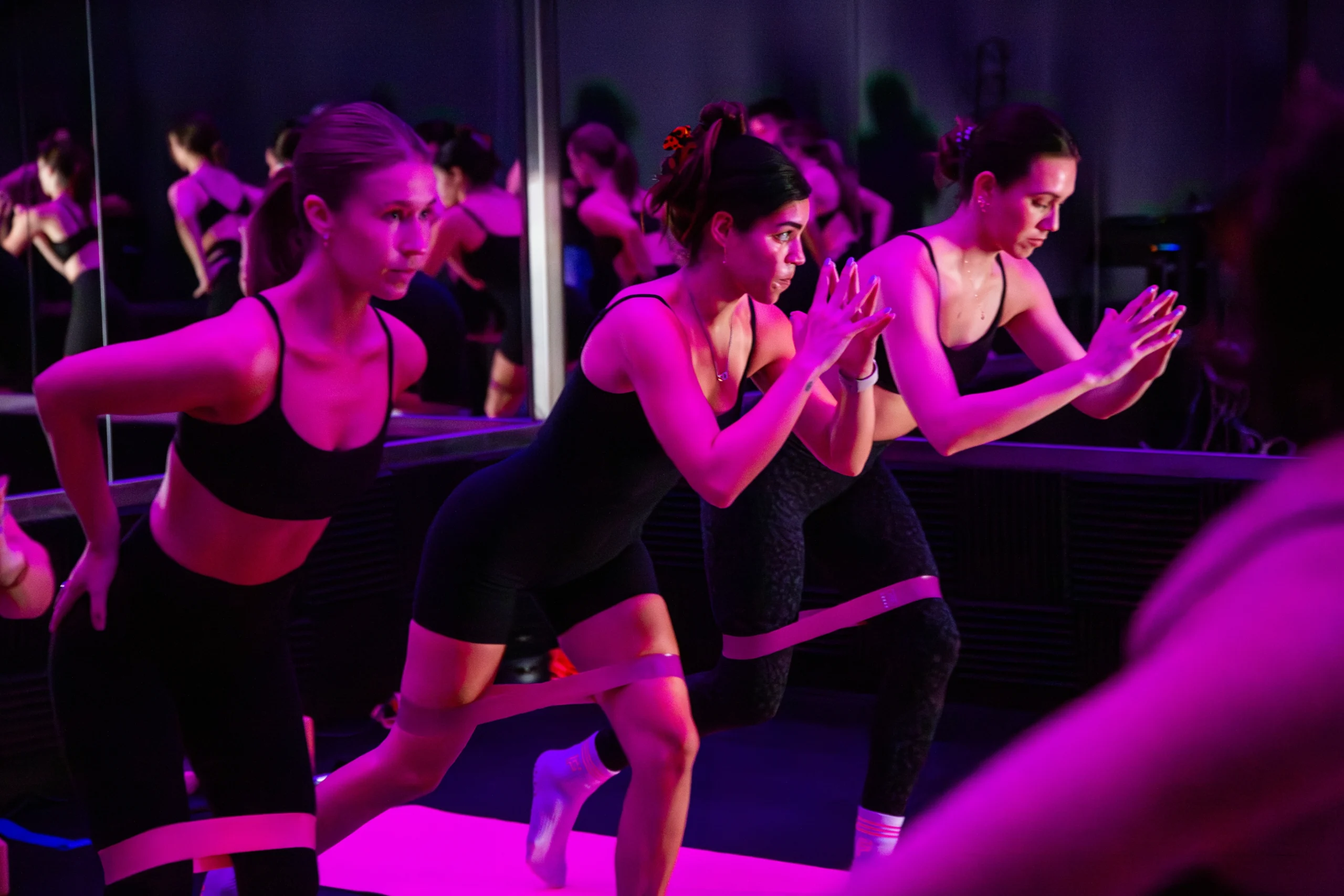
Infrared Mat Signature Sculpt is a natural fit if you often feel stiff at the start of a workout. It also suits you if you enjoy a warm room or a sweatier, more intense-feeling class. You’ll work with body weight, dumbbells, bands, and props, guided by the same SRT programming behind every FIT class.
Reformer Sculpt on the FITFormer is a strong choice if you’re sensitive to heat or get lightheaded easily. It also works well if you simply focus better in a cooler room. Spring resistance and SRT programming deliver a full-body strength challenge without the infrared heat.
You don’t have to pick just one. Both classes share the same SRT foundation, so moving between them changes the experience without changing the approach. Personal comfort matters too, since good technique depends on control and concentration, not on how hot the room is.
Heated training is generally manageable for healthy adults. The extra heat does mean hydration and pacing matter more.
If you have a medical condition, take medications that affect heat tolerance, or have concerns about heated exercise, ask a qualified healthcare professional whether it’s appropriate for you.
Infrared heat warms your body directly through radiant energy, similar to sunlight. A traditionally heated room warms the air first. Your body then warms up through contact with that air.
Not in terms of the core strength, control, and movement benefits. Those come from the exercise itself. Heat mainly changes how the class feels, making it warmer at the start, temporarily more flexible, and often more demanding on your heart.
No. Sweating is primarily a cooling mechanism. Your liver and kidneys are what remove waste from your body.
Choose Infrared Mat Signature Sculpt if you enjoy warmth or feel stiff at the start of workouts. Choose Reformer Sculpt if you prefer a cooler room or are sensitive to heat. Both use the same SRT programming, so the training behind them is the same.
Infrared heat, traditional heat, and no added heat each change how a workout feels. None of them changes what builds strength, control, and movement quality. That still comes from the training itself, done consistently over time.
At FIT AS FIRE, infrared heat is an addition to the method rather than the method itself. Infrared Mat Signature Sculpt pairs a warm room with Time, Tempo, and Tension, so every exercise still has a clear purpose. Curious how the warmth feels in your own body? Book Infrared Mat Signature Sculpt at the studio closest to you, or start with Reformer Sculpt on the FITFormer if you prefer a cooler room.
"*" indicates required fields

Our passionate team and amazing instructors help you clear your mind.