
Yes, Modern Pilates can build muscle. But “Pilates” alone doesn’t tell you enough about how challenging or strength-focused a workout actually is, and that’s exactly why the question needs a more specific answer than a generic yes or no.
Whether any workout, Pilates or otherwise, actually builds strength and muscle depends on resistance, effort, progression, programming, frequency, recovery, and your own training history. A slow, low-effort mat class and a demanding, intentionally programmed session on the FIT Reformer are not the same stimulus, even if both technically fall under the word “Pilates.”

Muscle growth isn’t tied to one specific piece of equipment or a particular training style. It’s tied to whether the target muscle is given sufficient resistance and repeated challenge, and if that challenge increases as your body adapts.
The question becomes whether a given class actually challenges your muscles enough, and if it keeps challenging them as you get stronger. A reformer, a barbell, a resistance band, and your own body weight can all create that stimulus. None of them create it automatically.
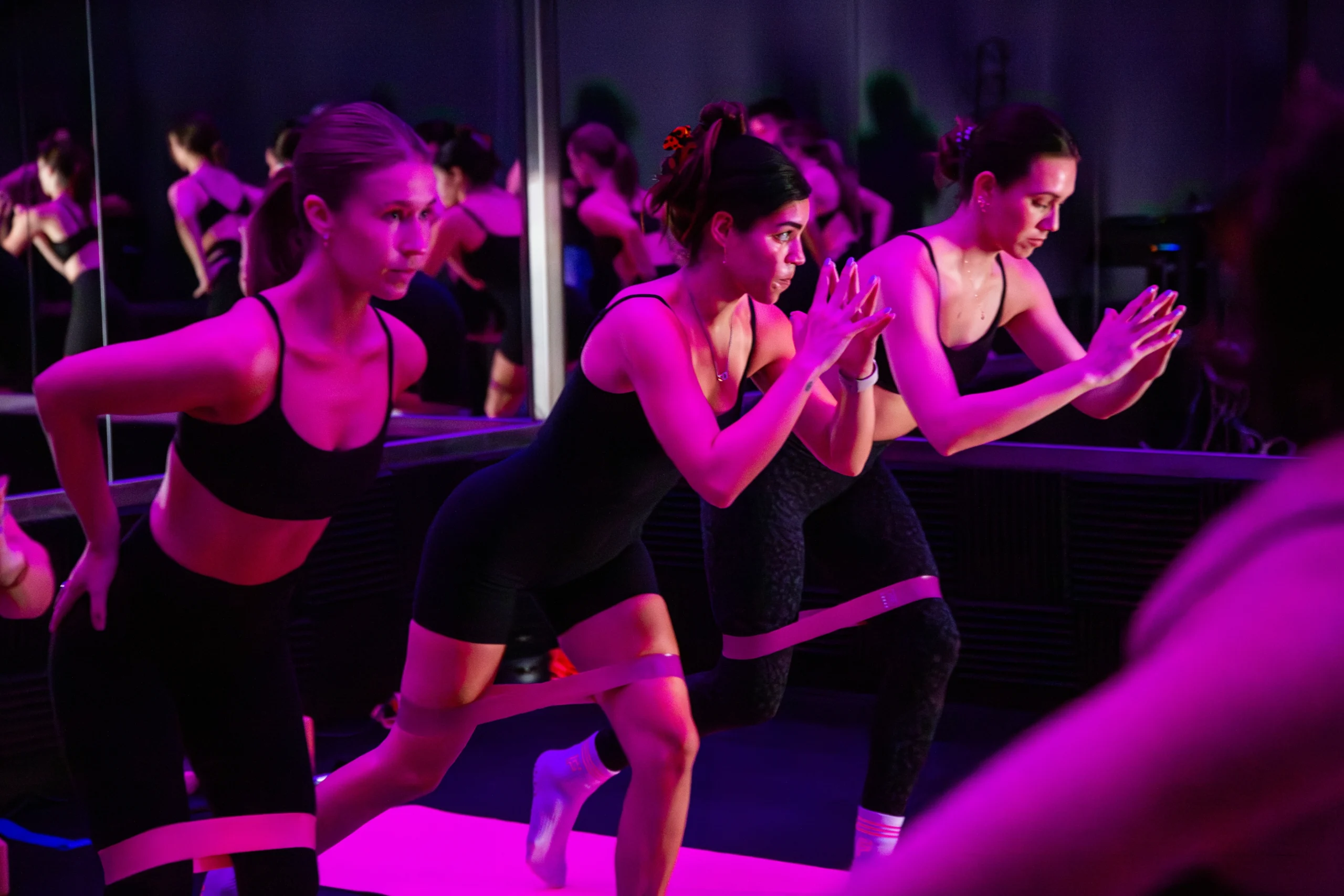
FIT’s classes are built around several tools that can genuinely challenge muscle, not just move it. On the FIT Reformer, spring resistance provides variable load throughout a movement, and that resistance can be adjusted to make specific exercises genuinely demanding. On the FIT Hot Mat, dumbbells and bands add external load that body weight alone often can’t provide, especially for the upper body and glutes.
Body weight and leverage still matter too, since changing the angle or length of a lever, extending the legs instead of bending the knees, for example, can meaningfully increase the demand on a muscle without adding any external resistance at all. Unilateral work, training one side of the body at a time, forces each side to work independently rather than letting a stronger side compensate for a weaker one, which can increase both the challenge and the training benefit. Stability demands add another layer, since controlling your body on a moving reformer carriage or through an unsupported position on the mat recruits stabilizing muscles that a fixed-machine exercise often doesn’t.
Longer exercise durations and limited rest between movements keep muscles under genuine load for extended periods, and intentional sequencing, the specific order exercises are placed in a class, compounds fatigue in a way that creates real progression rather than just variety for its own sake.

This is the core of how FIT approaches strength training, and it’s built around three specific principles: Time, Tempo, and Tension.
Slow, controlled movement reduces momentum, which matters because momentum lets a muscle coast through part of a movement instead of doing the work. When you remove momentum, the target muscle has to generate and control the movement the entire way through. Extended time under tension increases muscular demand for the same reason a slower rep is often harder than a fast one, the muscle simply spends more time working under load. And intentional sequencing, the order and pairing of exercises within a class, compounds fatigue deliberately, so that by the time you reach a given exercise, your muscles are already primed for it to feel genuinely challenging rather than easy.
Together, Time, Tempo, and Tension are what separate a workout that happens to use Pilates-style movements from one that’s actually engineered to build strength.
There isn’t an automatic winner here, and treating one as universally superior misses the point. Reformer Sculpt uses spring resistance and the SRT approach described above, Time, Tempo, and Tension applied specifically to reformer-based movement. Infrared Mat Signature Sculpt uses dumbbells, bands, props, body weight, and intentional strength programming to create its own version of the same underlying stimulus.
The equipment matters, since springs, dumbbells, and body weight each load a muscle a little differently. But the programming matters more. A well-programmed mat class with real dumbbells and bands can create more muscular demand than a poorly programmed reformer class, and the reverse is just as true. The format is the delivery system. The programming is what actually determines whether you’re building strength.

With consistent training, you may notice greater strength, muscular endurance, increased tolerance for resistance over time, better control and stability through movements, improved balance, and potential muscular development and body-composition changes. Not everyone will notice the same changes at the same pace, since starting point, consistency, recovery, and individual response all play a real role.
Neither approach is automatically better than the other, and framing it that way misses what actually matters. Both Modern Pilates and traditional weight training can create genuine resistance and drive real strength adaptations when they’re programmed with enough challenge and progression.
That said, someone specifically focused on maximizing hypertrophy or absolute strength, powerlifting numbers, for example, may also benefit from heavier external resistance than a Pilates-based format typically provides. That’s not a knock on Modern Pilates. It’s simply a reflection of different training goals calling for different tools, the same way a marathoner and a sprinter train differently even though both are runners.

Progressive overload is what keeps a body adapting instead of plateauing, and FIT builds that progression through several levers working together: resistance, range of motion, tempo, duration, stability, exercise variation, sequencing, and unilateral demands.
That might mean increasing spring resistance on the reformer, adding heavier dumbbells or resistance bands on the mat, extending a lever to make the same movement harder, slowing the tempo to increase time under tension, moving from a two-limb to a single-limb version of an exercise, or introducing a new variation your body hasn’t adapted to yet. Progress rarely comes from one single change. It comes from an intentional combination of these levers being adjusted over time, which is exactly what programming is for.
There’s no single, fixed timeline here, and be skeptical of anyone who promises one. Skill and control often improve relatively quickly, sometimes within the first several sessions, since your nervous system learns how to coordinate a new movement pattern before your muscles necessarily grow or your strength meaningfully increases.
Real strength gains and visible physical changes take consistent training over time, and how long that actually takes varies considerably by individual, starting point, training frequency, nutrition, sleep, and recovery. Anyone with an injury, a medical condition affecting exercise, or specific concerns about bone health should get individualized guidance before adding significant load or advanced variations.
The idea that structured, resistance-based Pilates-style training can build muscle isn’t just theoretical. A longitudinal MRI study found that regular Pilates training produced measurable increases in abdominal muscle volume over time, direct evidence that a Pilates-style stimulus can create real muscular adaptation, at least in the muscles a given program actually challenges. That’s an important detail. The same body of research also found that inactive women following a lower-resistance Pilates program over 36 weeks didn’t show significant growth in several other major muscle groups, a reminder that the muscle a program builds depends heavily on whether that muscle is actually being loaded and challenged, which is exactly why FIT’s intentional programming across the reformer and mat formats is designed to reach more than just the core.
Yes, when the class is programmed with sufficient resistance, effort, and progression. FIT’s Reformer Sculpt and Infrared Mat Signature Sculpt classes are built specifically around Time, Tempo, and Tension to create that kind of genuine strength-building stimulus.
Neither is automatically better. Reformer Sculpt uses spring resistance and SRT principles, while Infrared Mat Signature Sculpt uses dumbbells, bands, and body weight with the same underlying programming approach. The equipment matters, but the programming matters more.
SRT stands for Time, Tempo, and Tension. Slow, controlled movement reduces momentum, extended time under tension increases muscular demand, and intentional sequencing compounds fatigue to create real progression.
It depends on your goal. Both can create genuine strength adaptations. If your priority is specifically maximizing hypertrophy or absolute strength, you may also benefit from heavier external resistance than a Pilates-based format typically provides.
Skill and control often improve within the first several sessions. Meaningful strength gains and visible physical changes take consistent training over time and vary by individual starting point, frequency, and recovery.
Modern Pilates is capable of far more than core work or flexibility, but not every class creates the same training stimulus. The word “Pilates” alone won’t tell you how demanding a workout actually is. What matters is whether the resistance, effort, and progression are genuinely there.
At FIT, strength is built intentionally, through real resistance on the FIT Reformer and FIT Hot Mat, through Time, Tempo, and Tension, and through programming designed to progress over time rather than repeat the same easy routine indefinitely. If you’re ready to find out what that actually feels like, find your nearest studio and try Reformer Sculpt or Infrared Mat Signature Sculpt for yourself.
"*" indicates required fields

Our passionate team and amazing instructors help you clear your mind.